On the opportunities and challenges of investing in CEE
The Raiffeisen Central Europe ESG Equity Fund – formerly the Raiffeisen Eastern Europe Equity Fund – has delivered a strong performance since its restructuring and relaunch in 2023. What is the secret behind that?
András Szálkai: Two factors in particular have contributed to this: First, the thematic focus of the Raiffeisen Central Europe ESG Equity Fund. We were heavily invested in banks and companies benefiting from infrastructure and EU investments.
Second, the high valuation discounts: in 2022, the region was very cheaply valued. The discount relative to the global equity index was as high as 60%, compared to around 20-25% in the 10-15 years prior. This discount has now narrowed to around 40%, so it’s not as high anymore but still elevated. Together with strong earnings growth at many companies, this has given share prices a significant boost. At the same time, out of risk-reward considerations, we deliberately avoided Turkish shares. This has also proved beneficial. Active stock selection and patience have been key. Of course, past performance is no guarantee of future results, but I believe the fund is very well positioned.
What impact will the election in Hungary have on the Hungarian stock market and the wider region?
Szálkai: The key issue is whether Hungary will receive the EU funds that have been blocked until now. If an agreement is reached, over 10 billion euro could flow to Budapest very quickly. That would give a huge boost to growth in Hungary, particularly for investment and construction projects. It would significantly improve Hungary’s economic position, and the entire region could benefit, including Austrian companies, for example. Share prices in Budapest and the forint have already priced in some of this in the run-up to the election and immediately afterwards. I am therefore somewhat cautious in the short term, but very positive towards Hungary in the long term.
What impact will the investment programmes in defence and infrastructure have that the European Union (EU) and Germany’s announced or already launched?
Szálkai: A significant one. Germany’s economy has barely grown at all since 2019. However, the region is affected by that to varying degrees. Countries with strong economic ties to Germany (Austria, the Czech Republic, Slovakia) suffer particularly badly when the German economy is weak. Poland and Romania, with their stronger domestic economies, are more resilient in this respect. Conversely, massive investments by the German government can therefore have a very positive knock-on effect for the other countries in the region. The same applies to EU investment programmes.
What is the current focus of the Raiffeisen Central Europe ESG Equity Fund and why?
Szálkai: Poland and Austria continue to dominate in terms of country allocation. Poland accounts for around 50% of the portfolio, and Austria for 20-25%. In terms of sectors, the focus remains on financial companies for the time being. However, construction companies and their suppliers, industrial stocks, and selected consumer and technology companies are also of interest. Banks continue to benefit from strong credit demand and attractive interest margins, construction firms from infrastructure programmes, and industry from export and domestic growth. We currently continue to favour stocks with high market capitalizations (large caps) due to their better risk-reward setup. Medium-sized and smaller companies will likely come more into focus for us if and when valuations for the larger firms continue to rise.
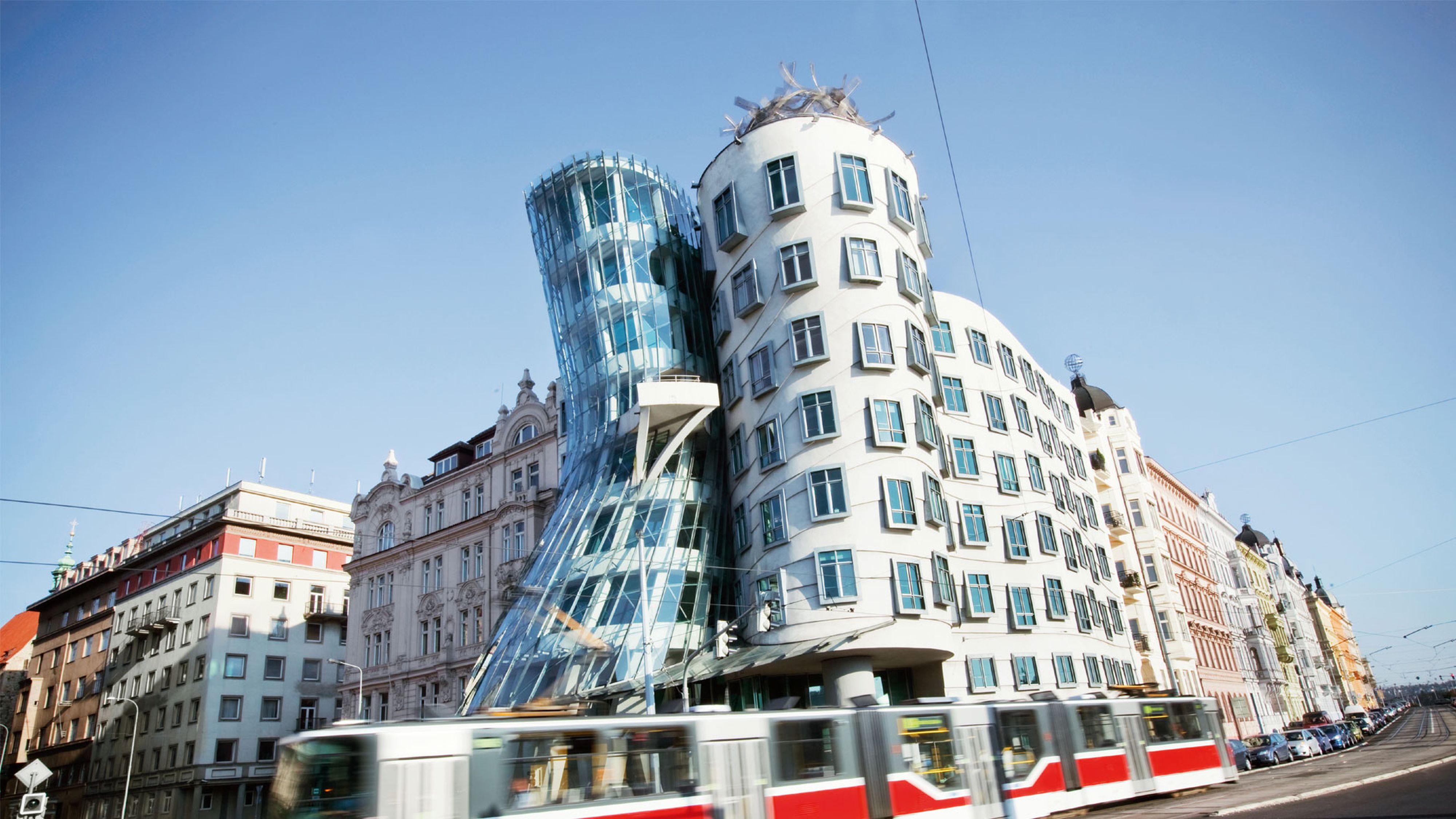
Investing in Central European equities
In focus: Raiffeisen Central Europe ESG Equities
What is the short- to medium-term outlook for the CEE region?
Szálkai: The growth outlook remains positive, as do the prospects for the region’s equity markets. However, I do not expect last year’s exceptionally strong price gains to repeat this year. Double-digit percentage increases are still possible, but of course not guaranteed. The risks of price declines are real and they could even increase. Energy prices are likely to be the decisive factor in the coming months. A prolonged war with Iran involving a permanent closure of the Strait of Hormuz would exacerbate the situation and have a negative impact on the economies of Central and Eastern Europe. Conversely, a swift de-escalation would significantly improve the situation. It should be noted that high oil prices also make it easier for Russia to finance the war in Ukraine, thereby reducing the pressure on Russia to end it quickly. However, should the conflict in Ukraine be resolved, whenever that may be, investor interest in Central and Eastern Europe is likely to pick up again, especially as the reconstruction of Ukraine could provide a fresh impetus for growth.
In short: external geopolitical factors remain the key source of uncertainty, but structural drivers of growth and investment remain intact.
Equities in the technology and artificial intelligence (AI) space have long been the stars of the stock markets. What is the situation in this regard in Central and Eastern Europe?
Szálkai: There are currently few opportunities in the region to participate directly in this trend. However, there are indirect avenues. For example, we are keeping a close eye on copper, which is required in large quantities for infrastructure and, in particular, AI data centres, and where supply bottlenecks are looming in the future – with corresponding consequences for the copper price and the profit margins of copper producers. Specialised suppliers in the technology sector are also of interest, such as AT&S for printed circuit boards.
The fund Raiffeisen-Zentraleuropa-ESG-Aktien exhibits elevated volatility, meaning that unit prices can move significantly higher or lower in short periods of time, and it is not possible to rule out loss of capital.